
- Home
- ZERO LINK
ZERO LINK
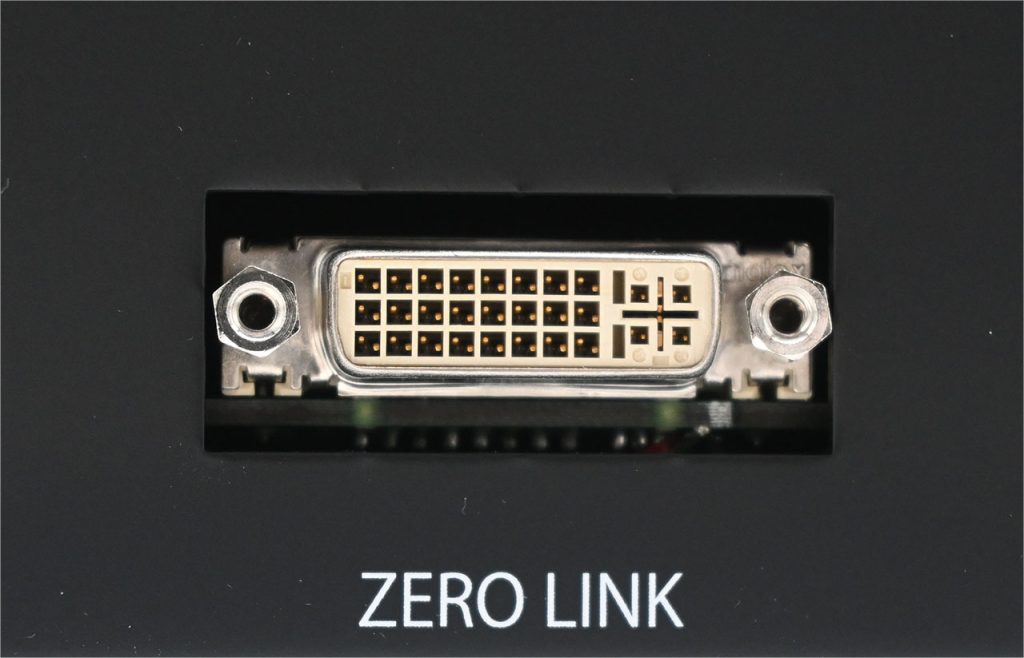
ZERO LINK is an standard jointly developed by SOULNOTE and SFORZATO for transmitting I2S and DSD signals with the DAC as the clock master.
How can we create the “ultimate DAC” with inputs like USB and LAN? The conclusion reached by both companies was “eliminating all asynchronous operation from the DAC.” ZERO LINK is the solution that achieves this.
The DAC’s job is to continuously convert digital data into analog at the rhythm of the sampling frequency. This rhythm must never falter; it must be constant and regular at all times.
Data sent via USB or LAN arrives at timings completely unrelated to this rhythm. Data comes in chunks of a certain size, and the DAC must arrange them so it can read them in sync with its rhythm. Both receiving the data and arranging it occur at timings unrelated to the DA conversion rhythm.
Imagine this: You’re clapping hands in a steady rhythm. Next to you, someone occasionally makes loud noises at unrelated times, or drums in a completely different tempo—thump, thump-thump-thump, thump… How disruptive would that be? Wouldn’t you want to say, “Shut up, get out of here”?
The DAC section connected via Zero Link is what completely expels anything that disrupts the rhythm.
We’ve banished the USB and LAN, which generate rhythm-disrupting noise, to the transport. Then, the DAC communicates the clapping rhythm to the transport, instructing it to send data one bit at a time in sync with that rhythm. This ensures the DAC’s internal environment is free from any noise other than its own clapping, allowing it to focus entirely on the DA conversion without any rhythm disruption whatsoever.
Connecting this transport and DAC is ZERO LINK. The transport communicates the format of the track it’s playing (such as the sampling frequency) to the DAC. The DAC then sends a rhythm matching that format to the transport. The transport then sends data to the DAC one bit at a time, riding that rhythm. This connection method, with this mechanism, is ZERO LINK.
Here are answers to anticipated questions.
1) I believe other companies also send I2S from the transport to the DAC. What makes yours different?
Several companies use HDMI cables to transmit I2S. However, this method fundamentally makes the transport the clock master.
ZERO LINK is a means to send music data from the transport to the DAC via I2S, with the DAC acting as the clock master. This concept of the DAC being the master is where the ingenuity lies.
First, regarding the meaning of being the clock master: Inside the DAC, digital data is converted to analog at a constant rhythm. This rhythm is the clock corresponding to the sampling frequency. When playing a CD, this rhythm is 44.1kHz. The key to D/A conversion is maintaining this rhythm as consistently as possible – ensuring the intervals don’t compress or stretch, achieving a regular rhythm. Whether the transport or the DAC is the master is determined by which device holds this clock signal. If the transport is the master, it dictates the rhythm. The clock signal is sent from the transport, and the DAC performs the D/A conversion in sync with that clock. Conversely, if the DAC is the master, the clock signal is sent from the DAC to the transport, and data is sent from the transport to the DAC in sync with that rhythm. A DAC can perform D/A conversion using its own internal clock rhythm. Maintaining a consistent rhythm for D/A conversion is crucial for determining digital audio sound quality. Relying on the transport to supply this rhythm from afar makes it difficult to guarantee sound quality. In this sense, having the DAC act as the clock master is an extremely important point for sound quality.
However, one problem arises here. The tracks played by the DAC can be 44.1kHz, 192kHz, or even DSD. Since the DAC is the master, it must supply the transport with a clock signal matching the track’s format. However, the DAC has no way of knowing what track will play next. This makes it impossible to send a clock to the transport that matches the track’s sampling frequency. This is where I2C communication comes into play. ZERO LINK establishes a protocol for communication between the transport and DAC using I2C. At the transition between tracks, the transport sends format information to the DAC. The DAC then confirms it has received the correct clock signal before playing the next track. This allows the DAC to function as the clock master for playback without needing to know the format of the track being played. This is the ingenuity of ZERO LINK.
Of course, the hardware incorporates numerous other innovations to achieve the highest sound quality, but these are proprietary know-how and cannot be disclosed here.
2) If you use ZERO LINK connection within the network player, wouldn’t it eliminate the need to separate the transport and DAC?
The essence of ZERO LINK lies in eliminating anything that disrupts the rhythm of D/A conversion from the DAC. In other words, separation is essential. With USB or LAN, no matter how hard you try, you cannot eliminate factors that disrupt the D/A conversion rhythm. That’s why we’ve moved this task to the transport. Naturally, the DAC must receive music data from the transport. This must be done in a way that doesn’t disrupt its internal rhythm, and that method is ZERO LINK.
3) Why doesn’t ZERO LINK disrupt the D/A conversion rhythm?
Inside the DAC, digital data is converted to analog at a constant rhythm. The importance of this rhythm being constant has already been explained. When receiving music data via LAN or USB, the impact on this rhythm can be understood using the drum analogy described earlier. The DAC connected via ZERO LINK completely eliminates all such disruptions by relocating them to the transport. At this point, everything inside the DAC operates strictly at the same rhythm as the D/A conversion. The I2S music data signal supplied via Zero Link is sent directly to the DAC chip (such as the ES9038Pro). When one piece of data arrives, the DAC converts it one at a time. Data reception occurs precisely in rhythm. Therefore, the rhythm of the D/A conversion remains completely undisturbed.
4) Why did you choose the DVI connector?
Using HDMI cables to transport I2S from the transport to the DAC is a method adopted by several companies, including PS Audio. However, we did not adopt HDMI because pin configurations vary, the clock transmission direction is opposite to that of other companies, and incorrect connections could potentially cause malfunctions. Additionally, the lack of a locking mechanism on HDMI connectors was another reason for not adopting it.
While DVI is an older standard, it is equally suitable for transmitting I2S signals as HDMI and includes a locking mechanism, making it reliable for audio signal transmission.
We include a SUPRA cable as the ZERO LINK cable. While its superior sound quality is a given, another reason for selecting SUPRA is that they reportedly have a long-term supply contract with the Swedish Air Force, ensuring stable and continuous supply