
- Home
- Master Clock
Master Clock
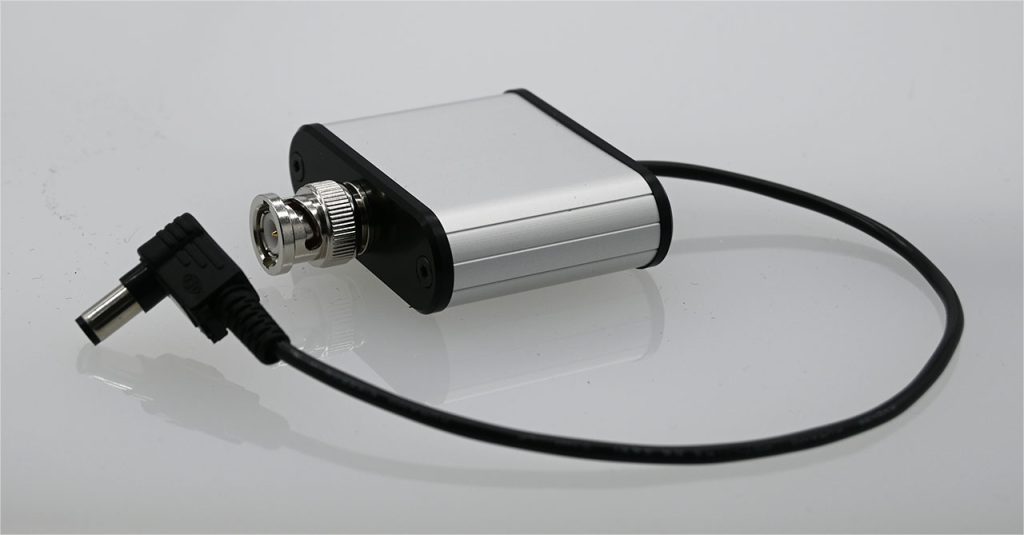
One of SFORZATO’s key focuses is the clock. The clock is the heart of digital audio, determining the timing of D/A conversion, so its quality directly impacts sound quality.
Compared to an internal clock, using an external clock offers significant advantages: it allows for a dedicated, large power supply, enables component placement prioritizing the clock, and permits the use of high-end clock generators. Therefore, all SFORZATO players are designed to accept an external clock.
The “standard” approach to enabling external clocking is to include a reasonably good internal clock and provide a switch to toggle between external and internal clock sources. However, this design necessitates a switch for internal/external selection. (Even an automatic switch requires some switching element.) The sound degradation caused by this single switch is actually quite significant.
After much consideration on how to enable external clocking while eliminating the switch, the conclusion was: “Make everything external.”
The DSP-05EX and 07EX models do not have an internal clock. Instead, the reference clock shown in the photo is included. It operates by connecting the BNC connector to the external clock input on the rear panel and inserting the L-shaped plug into the power terminal on the rear panel. Though small enough to fit in the palm of your hand, this external clock is a proud creation featuring a high-performance internal clock generator and a discrete buffer circuit. Naturally, it delivers exceptional sound quality even when used as the attached clock.
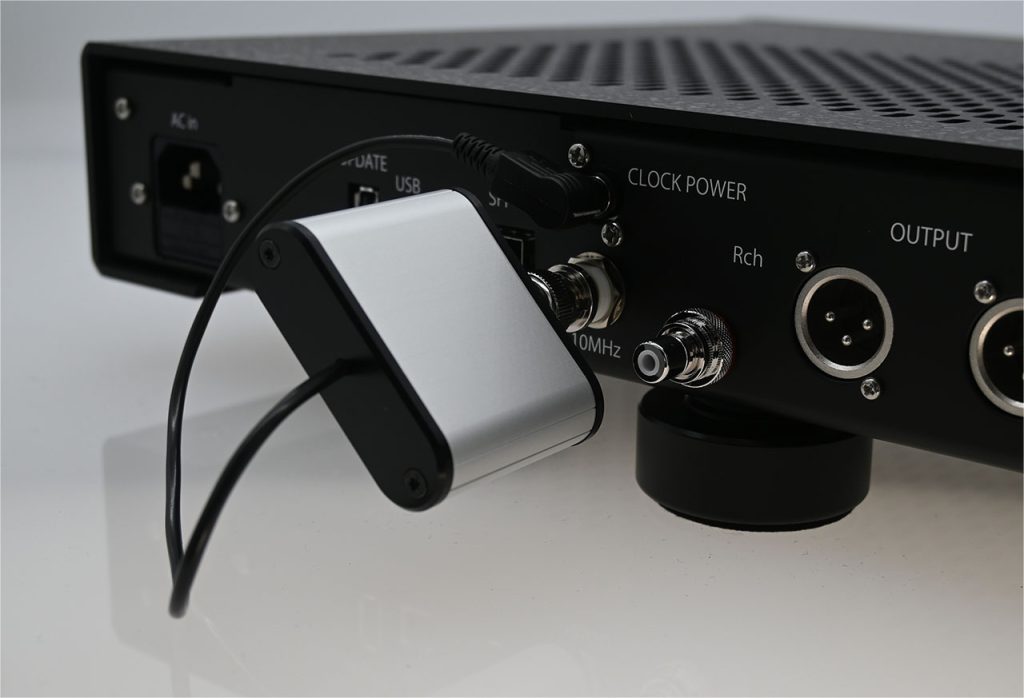
Another point of particular focus: the microcontroller inside the network player also runs on this clock. Consequently, if you turn on the switch without connecting the clock, it won’t make a sound. It won’t even display an “No clock connected” error message. This design prioritizes sound quality above all else, even over ease of use, deliberately avoiding the potential beat generation that could occur if a separate internal clock were used for the microcontroller. We’ve also meticulously designed the internal clock wiring, employing precisely impedance-controlled differential transmission for the clock signal from the clock input all the way to the DAC chip input. Balanced connections are more resistant to external noise than single-ended connections and also generate less noise themselves, following the same principle as when transmitting analog signals like microphone or line cables.
Because the DSP series features this dedicated clock input, the change in sound quality when feeding it a high-quality external clock is very significant.
We highly recommend connecting it to the PMC series clock.